Saturday, July 25, 2009

Little and Lewis


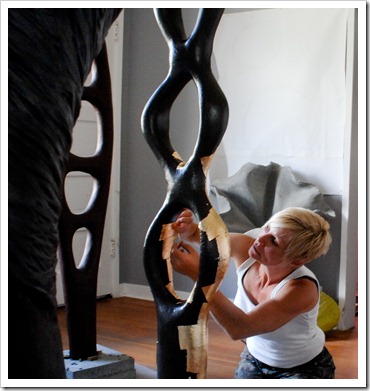
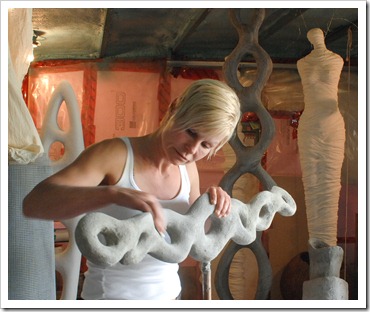
It was only a matter of time before I had to include a link to the web site of Little and Lewis. If you haven't heard of their work you are in for a real treat. Many will recognise the Gunnera leaf sculptures, even if you don't know who made them famous.
I saw these sculptures a number of years ago, and absolutely loved them. Oh the whimsy!!!, they are just too much fun.


I am finally getting around to posting them after coming across a great how to book, and web-site for making concrete Art in the Garden. I was very impressed with this site, inspired even as I too have been meaning to try a leaf casting.
There are lots of great tips for concrete garden art, and some links like the one to the Little and Lewis page that inspired me to post this.


Wednesday, June 25, 2008

Copper water fountains

I came across these wonderful fountains by Steve Rayman. He is a copper artist who has been building copper fountains since 1993. Here is a taste of his site, and a link at the bottom.
You'll see nothing like his work anywhere else in the country--or in the world. Steve Rayman has mastered creating copper sculptures evolving from basic geometric shapes and has added water sheeting down as an element of movement.
The look, the sound, the drama is unique.

Each of Steve's sculptures is individually created of hand-hammered copper, with an acid wash applied to produce the verdigris patina.


The added surprise with his fountain sculptures: the top forms a shallow pool that attracts birds of all sizes to drink and bathe--another element of movement added to your setting

Saturday, May 10, 2008

Purse Planters


I wanted to do something fun for Mother's Day, and came up with purse planters. I had a lot of fun making these.

I looked for fabric flowerpot style purses at the Sally Anne down the street.

I sealed them with epoxy compounds, I had from Kayak building to preserve, and water proof them.


It is a good idea to use a respirator, and rubber gloves with epoxy.


I stuffed the purses with plastic bags to give them form. Epoxy will not stick to silicon, and plastic. I applied the first coats of epoxy to just the outside. When the outside had hardened, I was able to apply additional coats to the inside, and outside. Most fabric can be buried in the epoxy with three coats. Check your work in the first hour to smooth out any drips. You will need to sand between coats.


I drilled drainage holes in the bottom of each purse. I didn't worry the holes were a little small. I knew with the small size of the planters they would dry out quickly in the summer heat.

I hung the purses while drying to fix the handle in an upright position.


My favorite was this delicate sequenced evening bag. I planted it with apricot punch, and cherry blast calibrocoa. This one is for my Mommy.


The others were a little larger and could accommodate geraniums, and typical basket stuffers. The sequence details on the handles look great under the epoxy, and will never fall off.


This one had embroidered flowers. I won't be able to go through the Sally Anne now without checking out the purses. I was able to pay between a few cents, and about $4 for my finds.

This one came out very shiny, it was of a synthetic fabric. These ones take much less epoxy, but drip easily.

Another cotton bag. I wonder what else I can make into planters. I have seen children's blue jeans, shoes, and shorts planted.


This one came with plastic bottom, and handles, so I didn't need to seal those parts. I hope you enjoyed these, if you have any questions about epoxy, or the planters I would be happy to comment.


Douglas Walker

A friend of mine thought I should meet this artist. I have been looking for unique fountains for my store, and he knew I would love this person's work. We haven't met yet but I do love his work, here is his web site. It's a great site, check out the links to other artists too. http://www.waterworksgardenart.com/


Pictured here is one of his custom made gates. Made from heavy copper tube it will withstand the test of time while becoming more beautiful with each passing year. Custom sizes available on request.

Humorous, eclectic and functional, a WaterWorks bird feeder is a wonderful addition to any garden, large or small.

WaterWorks fountains are designed to be used in containers such as half-barrels, and to be featured on decks, patios, and in garden ponds. The fountains are stunning, they are beautiful, and have a complexity, and attention to detail sure to captivate any ones attention.

http://www.waterworksgardenart.com/

Saturday, May 3, 2008

Wind Chime Artist

Unique designs using glass, beach stones, copper and wood. Inspired by the beauty of the beach glass his youngest son collected on the local beaches, artist Tim Kline worked to perfect a method to produce his own 'beach-type' glass that he now uses extensively in his work. He also uses local driftwood, beach stones, pebbles, red cedar and other natural materials.
The wind is not always blowing, so artist Tim Kline believes wind chimes should be about more than just sound: They should also look great!

Using his own beach glass inspired stained glass, copper, red cedar and other interesting beautiful materials, Tim designs and handcrafts stunningly beautiful works of art that go far beyond most wind chimes.

Why choose just a wind chime, when you could own wind chime art?


Rust is beautiful. So instead of copper, for the wind chimes , Tim has chosen iron chimes with a beautiful patina of rust.


Carefully selected Pacific driftwood is used to create these works that reflect the beaches they were gathered from.


Tim Kline is an Artist living on the Pacific coast of British Columbia. His work is inspired by the beauty of the natural environment he calls home. Visit the site of West coast Chimes, and enjoy this local artists works.


Monday, April 28, 2008

Tippy Pots

I use tippy pot stacks in my displays around the garden centre, and am often asked, "how do you do that"?
The trick is to install a piece of re bar, to support the stack. If you have a hard surface, where you intend to place your stack your re bar will need feet. The feet allow you to place it in the bottom of the pot. Otherwise you may pound re bar directly into the ground, and thread your pot onto it through the drain hole.

I sometimes place additional support, in this case some old stakes, to keep the second pot from settling. Make sure you compact the soil well before placing second pot id you don't use a stake.


The second pot rests on the soil.


The pot is held in place by threading it on the re bar through the drain hole.


The re bar should sit up against the edge of the pot, giving it maximum tip.


Thread on your third pot, balancing it on the edge of the second pot.


The next, or final pot, must tilt from the opposite edge, it's easy.


This is my giant version, these are large pots, and they sit outside the front of my store.


tippy pots planted up with pansies, and perennials.


Monday, April 7, 2008

Arborisculpture

An ancient art is being revised, pleaching or arbori-sculpture has been around for centuries. Many of us have seen braided ficus trunks on our potted specimens at our tropical plants store. This is the same in a go big or go home manner. Pleaching has also traditionally been used to make wattle fences; a method which involves bending and weaving live pliant saplings of species like willow. They are planted in a row, woven into a fence, and in time grow together to form a solid structure. Here are some pics where this technique has become although practical, I think for fun, or Art's sake.


Here is nature creating her own version.


Ficus tree hut


How to grow a Chair interview with Richard Reames

Using ancient grafting techniques and a few basic tools, Richard Reames shapes living trees into furniture and sculpture near his home in Oregon for clients worldwide. He is the author of two self-published books, How to Grow a Chair: The Art of Tree Trunk Topiary with Barbara Delbol, and Arborsculpture: Solutions for a Small Planet, published in June. His work was on display this summer at the World Expo in Aichi, Japan. Joshua Foer spoke to Reames in July 2005 by telephone. http://www.cabinetmagazine.org/issues/20/foer.php